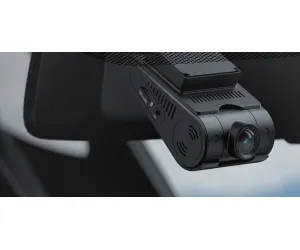

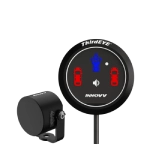


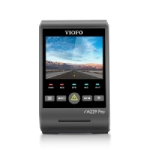
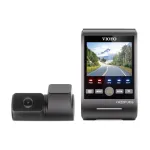
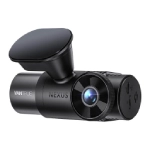
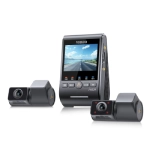

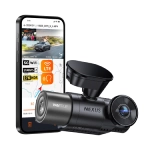
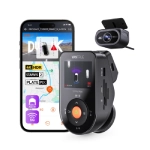
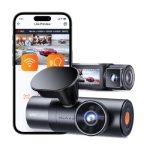





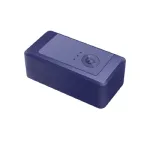
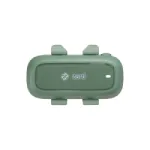


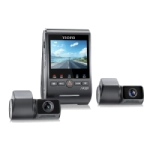
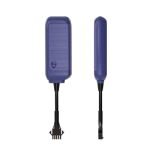

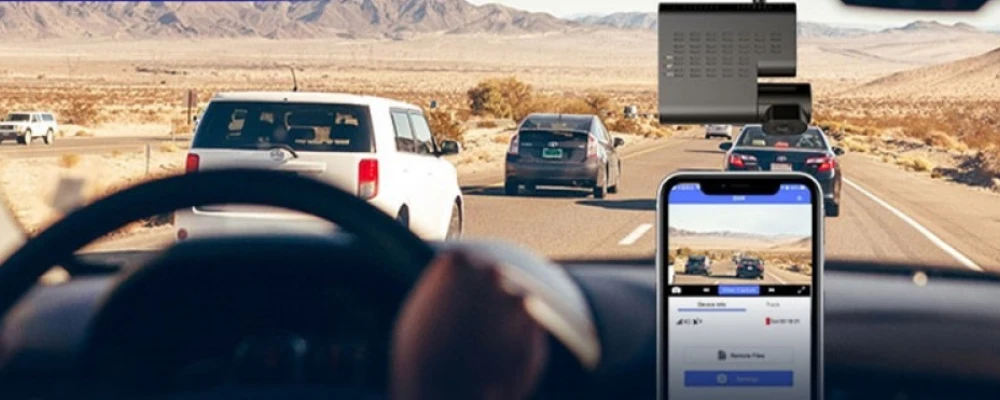
A dashcam is a small camera mounted on your windshield or dashboard that continuously records the road while you drive. In Saudi Arabia in 2026 it has become a standard piece of vehicle safety equipment: it captures clear video along with GPS-stamped speed, time, and location data that you can hand directly to Najm and the Traffic Police to settle a claim, defend against a wrongly issued Saher violation, and protect your car while it is parked. The most common type is the car dash cam, though motorcycle, fleet, and 4G live-streaming models are widely used too.
The name itself simply combines "dashboard" and "camera." But a modern dash cam is far more than a recorder — it is a small, always-on witness that never forgets a detail, never takes sides, and is always ready to give an objective account of exactly what happened on the road.
How Does a Dash Cam Work?
Understanding the basics helps you choose the right model and use it correctly. A dash cam powers on automatically the moment your engine starts and begins recording with no input from you. Here is what happens behind the scenes.
Loop Recording
The camera saves video in short segments — typically one, three, or five minutes each — onto a microSD memory card. When the card fills up, it automatically overwrites the oldest clips with new footage. This means you never have to manage storage manually; the camera simply keeps recording indefinitely.
The G-Sensor and Event Locking
A built-in G-sensor (accelerometer) constantly measures motion and impact. If it detects a sudden jolt — a collision, hard braking, or someone hitting your parked car — it automatically locks the current clip into a protected folder so loop recording cannot overwrite it. That clip becomes your evidence, kept safe until you remove it.
GPS and Data Overlay
Models with built-in GPS stamp each frame with your exact speed, location, and a precise timestamp. This metadata is often as valuable as the video itself, because it independently confirms how fast you were travelling and where the incident took place — exactly the proof that settles a fault dispute or overturns a wrong fine.
Frame Rate and Bitrate
Two technical numbers decide how usable your footage really is. Frame rate (measured in fps) is how many images are captured per second — 30fps is standard, while 60fps captures fast-moving plates more sharply. Bitrate is how much data is used to store each second of video; a higher bitrate means more detail survives, which is why two "4K" cameras can produce very different image quality. When comparing models, do not look at resolution alone.
Why You Need a Dash Cam in Saudi Arabia
1. Najm-Ready Accident Evidence
Najm and the Saudi Traffic Police rely heavily on dash cam footage to determine fault in accidents. A clear 4K clip with a visible plate, timestamp, and GPS speed log often resolves a dispute in a single visit instead of weeks of back-and-forth, and protects you from false claims by the other party. In a hit-and-run, your recording may be the only way to identify the vehicle that fled — capturing the plate number, colour, and direction of travel that lets authorities track the driver down.
2. Defense Against Wrong Saher Fines
Automated enforcement is efficient, but errors happen — for example a fine for crossing on a signal that was actually legal, or a speed reading that does not match reality. Your footage records exact speed, time, and location, giving you the proof to file an objection and overturn an incorrect violation. For many drivers, successfully contesting even one or two wrong fines pays for the camera itself.
3. Protection Against Insurance Fraud
Staged accidents and exaggerated third-party claims raise everyone's premiums. A common scam is the "brake check," where a driver cuts in front of you and brakes hard to force a rear-end collision, then blames you. Video evidence makes it far harder for a fraudulent claim to stick, which helps keep your insurance costs down and your record clean.
4. Parking Protection in Malls and on the Street
With parking mode, the camera keeps watching after you walk away. Motion and impact sensors capture hit-and-runs in mall car parks, door dings from careless neighbours, and attempted break-ins — and 4G models can send an instant alert to your phone the moment something touches your car. This is one of the most requested features in the Kingdom, where busy mall and street parking make unattended damage common.
5. Monitoring Drivers and Fleets
Companies use dash cams to review driver behavior, reduce risky driving, and lower accident rates across a fleet. Families use them to keep an eye on how a new or teenage driver is performing, encouraging safer habits behind the wheel. For ride-share and delivery drivers, an interior camera also documents passenger interactions and protects against false complaints.
Types of Dash Cams
Choosing the right configuration depends on how you drive and what you need to protect. Here are the main options, from simplest to most complete.
1. Front-Facing (Single Channel)
Records the road ahead only. The simplest and most affordable option, and a solid starting point for most daily drivers who mainly want accident and Saher protection. Browse the full front dash cam range to compare single-channel models.
2. Dual Channel (Front and Rear)
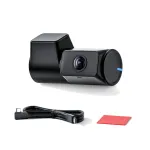
Adds a rear camera for full front-and-back coverage — the most popular choice in 2026, since many Saudi accidents and road-rage incidents involve the vehicle behind you. The rear camera is essential for proving fault when someone rear-ends you, and it doubles as protection while parked. See the front & rear dash cam options.
3. Front & Cabin (Interior Coverage)
Pairs a front camera with an interior cabin lens that records inside the vehicle. This is the go-to setup for Uber, Careem, and taxi drivers who need to document passenger behavior, as well as parents monitoring a young driver. Explore front & cabin dash cam models.
4. Triple Channel (Front, Cabin and Rear)
The most complete setup — front, cabin, and rear in one system. Professional ride-share drivers and anyone who wants no blind spots choose a front, cabin & rear dash cam for complete documentation of the road and the interior at the same time.
5. 4G Live-Streaming and Fleet Cams
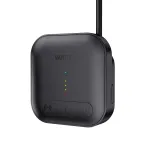
Stream live video to your phone from anywhere and receive real-time parking alerts. Ideal for fleet managers, business owners, and anyone who wants remote eyes on their vehicle even when far away. You can check on your car, review footage in the cloud, and get notified instantly of any impact — explore the 4G live-streaming dash cam range.
6. Motorcycle and Action Cams
Weatherproof, vibration-resistant systems built for two wheels, where evidence matters even more because riders are so exposed. Browse purpose-built motorcycle dash cam options designed to survive rain, dust, and engine vibration.
Best Features to Look for in 2026
Not all dash cams are equal, and the cheapest option is rarely the best value in Saudi conditions. These are the features that actually matter when it counts.
Saudi Summer Heat Tolerance
This is the single most important factor for the Kingdom. Cabin temperatures regularly exceed 70°C in summer, which swells and destroys cheap lithium-battery cameras, sometimes dangerously. Choose a model built around a supercapacitor power system instead, which is designed to survive extreme heat long-term. Also follow these tips for preventing your dash cam from overheating to extend its life.
4K Resolution with a Sony STARVIS 2 Sensor
1080p is the practical minimum, but 4K paired with a modern Sony STARVIS 2 sensor is what reliably captures a readable number plate — the single detail that most often wins a Najm dispute. Resolution alone is not enough; the quality of the image sensor is what determines whether a plate is legible at speed or at night.
Strong Night Vision (HDR)
HDR and high-sensitivity sensors keep footage clear in low light and against harsh headlight glare, so plates stay legible after dark. Since a large share of incidents happen at night, night performance is not a luxury — it is core to whether the footage is usable as evidence.
Wide-Angle Lens (140° or More)
A wider field of view captures more of the surrounding lanes and the vehicles around you. Around 140° is a good balance — wide enough to see adjacent lanes without so much distortion that distant plates become unreadable.
G-Sensor and Parking Mode
The G-sensor detects sudden impacts and automatically locks the relevant clip so it isn't overwritten — both while driving and while the camera is in parking mode. For full parking protection, look for a model that supports a hardwire kit with low-voltage cut-off, so it can keep watching without draining your car battery.
Built-in GPS
Stamps speed and location onto every clip, which strengthens your position with insurers and the courts and is invaluable for contesting Saher fines accurately.
A High-Endurance Memory Card
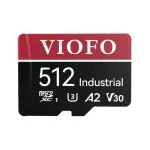
A dash cam is only as reliable as its storage. Standard consumer microSD cards wear out quickly under constant loop recording and heat. Use a high-endurance card rated for continuous video, and match the capacity to your resolution — 4K footage fills storage fast, so 128GB or 256GB is sensible for higher-resolution models.
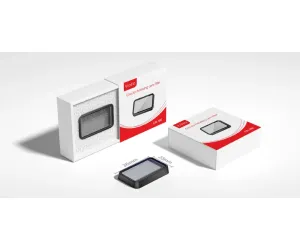
A CPL Filter for Glare
A circular polarizing (CPL) filter clips over the lens and cuts reflections from your dashboard bouncing off the windshield. In bright Saudi daylight this noticeably improves clarity and colour, helping the camera see through glare to the road and plates beyond.
Arabic-Capable App and Local Warranty
Imported grey-market units often ship with a Chinese-only app and no valid warranty. Buy a model with an Arabic-capable app and a local warranty so you have support, firmware updates, and replacement parts inside the Kingdom — not stranded with a device you cannot configure or repair.
Understanding Key Dash Cam Terms
Dash cam listings are full of jargon. Here is a plain-language glossary of the terms you will meet most often.
- Channel
- The number of cameras in the system. One channel is front only, two is front and rear (or front and cabin), three is front, cabin, and rear.
- Supercapacitor
- A heat-resistant power component that replaces the lithium battery in quality cameras, allowing safe operation in high temperatures — essential for the Saudi climate.
- STARVIS 2
- A Sony image sensor designed for excellent low-light performance, producing brighter, sharper night footage with more readable plates.
- HDR / WDR
- High Dynamic Range and Wide Dynamic Range balance bright and dark areas in the same frame, preventing blown-out highlights from headlights or sun.
- FOV (Field of View)
- How wide an area the lens captures, measured in degrees. A wider FOV sees more of the surrounding lanes.
- Loop Recording
- Continuous recording that overwrites the oldest footage when the memory card is full, so the camera never stops.
- Buffered Parking Recording
- An advanced parking mode that keeps a few seconds of footage from before an impact was detected, so you see the lead-up to the event, not just the aftermath.
- Hardwire Kit
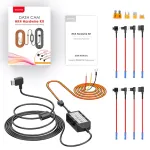
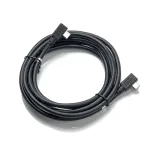
- A cable set that connects the camera to your fuse box for permanent power, enabling 24/7 parking mode with battery-protection cut-off.
How to Choose the Right Dash Cam
To narrow it down quickly, ask yourself three questions. First, what do you need to protect — just the road ahead, or the rear and interior too? That decides your channel count. Second, where do you park — if it is often outdoors or in busy lots, prioritize parking mode and a hardwire kit. Third, what is your budget — a quality single-channel 4K camera covers most drivers well, while ride-share professionals and fleet owners get more value from triple-channel or 4G systems. In every case, do not compromise on heat tolerance and sensor quality; those two factors separate a camera that produces usable evidence from one that produces blurry, useless clips when you need it most.
How to Install a Dash Cam
For an unobstructed view, mount the camera behind the rearview mirror, slightly to the passenger side if needed — and make sure it does not block your line of sight, which is both a safety issue and a legal requirement in Saudi Arabia. Clean the glass thoroughly before applying the adhesive mount so it holds in the heat. Route the power cable along the headliner and down the A-pillar, tucking it out of sight rather than letting it dangle across the windshield.
Power Options
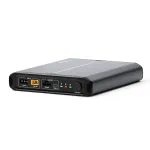
The cigarette-lighter socket is fine for basic driving use, where the camera runs only while the engine is on. For continuous 24/7 parking surveillance, have the camera hardwired to the fuse box with a kit that includes low-voltage protection, so it can record while parked without flattening your battery. Professional installation keeps the cabling completely hidden, sets the voltage cut-off correctly, and protects your vehicle warranty — well worth it for multi-camera and hardwired setups.
Common Mistakes to Avoid
A few simple errors stop a dash cam from doing its job. Using a cheap, low-endurance memory card is the most common — it corrupts quickly in the heat and you discover the failure only after you needed the footage. Forgetting to set the correct date and time weakens your evidence, since an inaccurate timestamp undermines a claim. Mounting the camera where it blocks your view is both unsafe and against the rules. And relying on a battery-powered camera in summer, rather than a supercapacitor model, leads to early failure in Saudi heat. Avoid these and your camera will be ready every time.
Caring for Your Dash Cam in the Saudi Climate
A little maintenance goes a long way in this environment. Format the memory card every few weeks through the camera's menu to keep recordings reliable and prevent file errors. Periodically confirm the camera is actually recording and that the date and time are correct, since accurate timestamps are essential for evidence. Park in shade where possible and consider a sunshade to reduce cabin heat. Finally, check the firmware in the app occasionally — manufacturers like VIOFO and Vantrue release updates that improve stability, image quality, and parking-mode behavior.
Are Dash Cams Legal in Saudi Arabia?
Yes. There is no legal prohibition on installing a dash cam in the Kingdom, and authorities actively encourage their use as accident evidence. Two conditions apply. First, the camera must not obstruct the driver's view. Second, under Saudi privacy rules and the Personal Data Protection Law, you must not publish footage of other people, their vehicles, or their plate numbers on social media without permission. Sharing a clip privately with Najm, your insurer, or the Traffic Police as evidence is perfectly fine and is exactly what the footage is for — the restriction is on public exposure, not on legitimate use as proof.
How to Use Your Footage After an Incident
If you are involved in an accident, act quickly to preserve the evidence: press the emergency lock button on the camera (or the Bluetooth remote) so the clip is protected from being overwritten, then copy the relevant footage to your phone through the camera's app before handing anything over. You can show the investigating officer the clip directly on the camera screen, and keep your own backup on your phone or computer before sharing the original. The embedded GPS and timestamp data strengthen your position with both the insurer and the courts.
Conclusion
In 2026 a dash cam is less a gadget than basic protection for any Saudi driver — fast Najm claims, a defense against wrongful Saher fines, fraud protection, and round-the-clock parking security all in one affordable device. When you choose one, prioritize what the local market actually demands: supercapacitor heat tolerance, 4K night-capable video with a quality sensor, built-in GPS, a high-endurance memory card, and a local warranty with Arabic app support. Get those right and the camera will quietly do its job for years, asking nothing of you until the day you really need it. Ready to protect your car? Explore our full dashcam range, or go straight to the car dash cam collection at bsta.sa.
Frequently Asked Questions About Dash Cams
1. Are dash cams legal in Saudi Arabia?
Yes. Dash cams are legal in Saudi Arabia as long as they do not obstruct the driver's view. You may use footage as evidence with Najm and the Traffic Police, but you must not publish videos of other people or their cars on social media without permission.
2. Does Najm accept dash cam footage for accident claims?
Yes. Najm and the Saudi Traffic Police rely on dash cam footage to determine fault. Clear video with a visible plate, timestamp, and GPS data often settles a claim quickly and protects you from false claims.
3. Which dash cam is best for the Saudi summer heat?
Choose a model with a supercapacitor instead of a lithium battery. Cabin temperatures can exceed 70°C in summer, and supercapacitor cameras are built to withstand that heat far better, giving you a longer service life.
4. What is the difference between a front, dual, and triple dash cam?
A front (single-channel) camera records only the road ahead. A dual camera adds a rear lens for front-and-back coverage. A triple camera also adds an interior cabin lens, which is ideal for Uber, Careem, and taxi drivers.
5. What video resolution should I choose?
1080p is the minimum, but 4K with a modern Sony STARVIS 2 sensor is recommended because it captures readable number plates day and night — the detail that decides most accident disputes.
6. Do dash cams keep recording while the car is parked?
Models with parking mode do. They use motion and impact detection to record incidents while you are away, and 4G models can send a real-time alert to your phone after a hit or break-in attempt.
7. How long can a dash cam record, and do I delete old footage?
It depends on the memory card size, but you never need to delete footage manually. Dash cams use loop recording, which automatically overwrites the oldest clips once the card is full, while protected (locked) event clips are kept.
8. Can I connect a dash cam to my smartphone?
Yes. Most modern models connect over Wi-Fi or Bluetooth so you can view, download, and share clips from the app. For Saudi users, an Arabic-capable app and a local warranty make ownership much easier.
9. Do dash cams record audio?
Yes, most do, and the microphone can be switched off in settings if you prefer not to record sound inside the cabin.
10. Should the dash cam be hardwired or plugged into the lighter socket?
The lighter socket is fine for basic driving use. For continuous 24/7 parking surveillance, have the camera hardwired to the fuse box; professional installation keeps the wiring hidden and protects your vehicle warranty.
 Dash Cam
 Buildings Security
 Tracking Systems
 Reviews & Comparisons