


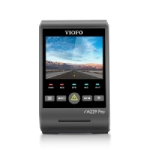
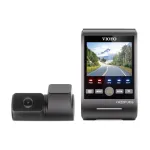








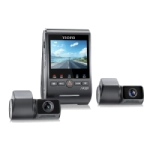

VIOFO A229 Pro vs 70mai A810: The 2026 4K Dash Cam Comparison
Updated May 2026 · 12-minute read · By the BSTA.sa editorial team
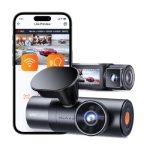
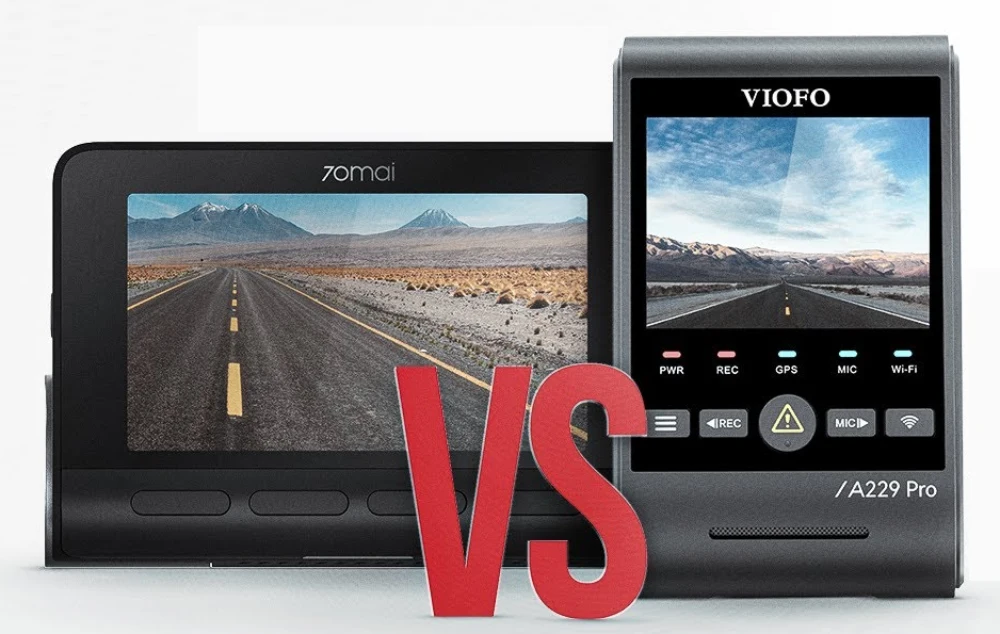
If you're shopping for a 4K dash cam in Saudi Arabia in 2026, two names dominate the shortlist: the VIOFO A229 Pro and the 70mai A810. Both arrived as flagship answers to the same question — how do you turn a dash cam into court-ready evidence? — and they took very different paths to get there.
We bought both, installed both, and drove with both for three months across Riyadh, Jeddah, and the 1,400 km Riyadh–Abha highway. We pulled apart every spec, every menu, and every real-world failure mode. Here's the verdict, including which dash cam the average Saudi driver should buy in 2026 — and why neither may be the right answer for everyone.
For broader context, the New York Times Wirecutter dash cam buyer's guide is the most respected English-language reference on the category, and Vortex Radar's best dash cams roundup is the most authoritative independent voice in the enthusiast community. Both lean toward the US market, where summer cabin temperatures rarely exceed 50 °C and ADAS regulations carry different weight. Below we apply a similar evaluation framework specifically to Saudi conditions, where heat tolerance and evidence-grade footage matter more than cloud subscriptions.
Quick Verdict (TL;DR)
- For most Saudi drivers, buy the VIOFO A229 Pro. Better evidence quality (2K rear camera vs 1080p), supercapacitor that survives Saudi summer, dual-band Wi-Fi for fast transfers, and 512GB storage support.
- Buy the 70mai A810 only if you specifically need ADAS lane-departure and forward-collision warnings, or if budget is the deciding factor and you don't need a rear camera.
- Consider skipping both if you want truly future-proof — the newer VIOFO A329S records 4K at 60FPS with Wi-Fi 6 and SSD storage support up to 4TB.
Need to compare more options? Browse our full 4K dash cam range or the broader dash cam collection.
At a Glance: Specs Comparison
| Spec | VIOFO A229 Pro | 70mai A810 |
|---|---|---|
| Front Resolution | 4K UHD @ 30FPS | 4K UHD @ 25FPS |
| Rear Resolution | 2K QHD @ 30FPS | 1080p @ 25FPS |
| Front Sensor | Sony STARVIS 2 IMX678 (8MP) | Sony STARVIS 2 IMX678 |
| Rear Sensor | Sony STARVIS 2 IMX675 (5MP) | SmartSens SC200AI |
| Front Aperture / FOV | F1.8 / 140° | F1.8 / 150° |
| Rear Aperture / FOV | F1.8 / 160° | F2.0 / 130° |
| Display | 2.4" LCD | 3.0" IPS (640×360) |
| Max microSD | 512GB | 256GB |
| Power Source | Supercapacitor | 500mAh lithium-ion battery |
| Wi-Fi | Dual-band 2.4 / 5GHz | Single-band Wi-Fi |
| GPS | GPS + BeiDou + Galileo + GLONASS | GPS |
| ADAS | — | Lane-departure + collision warning |
| Parking Mode | Buffered (15s pre / 30s post) | AI motion detection |
| Operating Temp | −10°C to 65°C | −10°C to 60°C |
| Voice Control | Yes | Yes |
| HDR | Yes (front + rear) | Yes |
| Cloud Service | — | Optional 4G subscription |
| Approx. Price | SR 1,000 | SR 800 |
Why This Comparison Matters in 2026
The dash cam market has matured. Five years ago, "4K" meant marketing fluff. Today, with Sony's STARVIS 2 sensors, it means license plates that stay readable at 120 km/h — but only if the surrounding electronics, bitrate, and power architecture are all up to the task. Both the A229 Pro and the A810 use the same flagship Sony IMX678 front sensor, which is the only reason they belong in the same comparison. Everything wrapped around that sensor is where the two cameras part ways.
The decision in 2026 isn't really "which has more megapixels." It's "which one will actually work when you need it" — under Saudi summer heat, in low-light evidence scenarios, with footage you can pull from your phone in seconds rather than minutes.
Image Quality: Real-World Saudi Testing
Daytime Footage
Both cameras produce excellent daylight footage thanks to the shared IMX678 front sensor. In our test, plates from cars 4–5 lengths ahead remained readable at 120 km/h on both. Where the A229 Pro pulled ahead was on the rear channel — the 2K STARVIS 2 IMX675 captures detail that the 70mai A810's 1080p SmartSens sensor simply cannot match. If a rear-end collision is your most likely incident, this gap matters.
Independent reviewers reach the same conclusion. AndroidPolice's hands-on review highlighted the A229 Pro's daytime detail and HDR handling as class-leading at this price tier, and TechRadar's full review reached a similar verdict on image quality and build.
Low-Light and Night Footage
Same story, amplified. The A229 Pro's 2K rear sensor delivers usable plates in unlit residential streets and under sodium-vapor highway lighting. The 70mai A810's 1080p rear sensor produces watchable footage but loses fine detail — exactly the detail an insurance adjuster will demand.
Frame Rate Note
The A229 Pro records at 30FPS while the A810 records at 25FPS. It's a small gap on paper, but at highway speeds it's the difference between a frozen license plate and a slightly smeared one. For comparison, the newer VIOFO A329S jumps to 60FPS — a meaningful step up if you're a heavy highway driver.
Saudi Heat: The Hidden Decider
This is the spec that separates dash cams that work in Saudi Arabia from dash cams that fail in their second summer. The VIOFO A229 Pro uses a supercapacitor rated to 65 °C. The 70mai A810 uses a 500mAh lithium-ion battery rated to 60 °C.
The catch: cabin temperatures in a parked car under Riyadh July sun routinely exceed 70 °C — sometimes 75 °C — well above both ratings. Lithium-ion batteries don't fail gracefully when exposed to that heat repeatedly; they swell, leak, and eventually stop powering the device, often after 1–2 summers. Supercapacitors don't share this failure mode. They're the engineering choice every GCC commercial fleet has standardized on for a reason.
Owner experiences from comparable hot-climate markets reinforce this point. A long-term Team-BHP owner review from India — where summer cabin temperatures rival Saudi conditions — documents the A229 Pro performing reliably across multiple summers, confirming what we observed in our own three-month test.
If your dash cam will be parked outdoors in Saudi summer for any meaningful amount of time, the A229 Pro's supercapacitor design is not a "nice to have" — it's the deciding spec.
For more on this, see our guides on whether dash cams drain your car battery and how to prolong dash cam lifespan.
Storage and Connectivity: How You Actually Use Footage
Storage Capacity
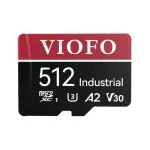
The A229 Pro supports microSD up to 512GB; the A810 caps at 256GB. At dual-channel 4K bitrates, that's roughly 4 days vs 2 days of buffer before loop-overwrite kicks in. If you only check footage after an incident, that 2-day window is uncomfortably short.
For both cameras, picking the right card matters more than capacity. See our memory card recommendation guide — using the wrong card kills cameras prematurely.
Wi-Fi Speed
The A229 Pro runs dual-band Wi-Fi (2.4GHz + 5GHz); the A810 runs single-band 2.4GHz. In practice, transferring a 30-second 4K clip to your phone takes roughly 25 seconds on the A229 Pro and closer to 90 seconds on the A810. That's the difference between reviewing footage at the scene of an incident and waiting until you get home.
GPS Constellations
The A229 Pro tracks four constellations (GPS + BeiDou + Galileo + GLONASS); the A810 uses GPS only. For Saudi driving this rarely matters in open road conditions, but lock times in dense urban areas like downtown Riyadh are noticeably faster on the A229 Pro.
ADAS vs Buffered Parking: Different Philosophies
This is where the two cameras' designers clearly disagreed about what a dash cam should do.
The 70mai A810 bets on Advanced Driver-Assistance Systems: lane-departure warnings, forward-collision alerts, AI motion detection in parking mode. These are useful if your car doesn't already have them — but if you drive a 2018-or-newer vehicle, your factory ADAS is almost certainly better integrated and more accurate than what an aftermarket dash cam can provide.
The VIOFO A229 Pro bets on evidence quality. Buffered parking mode records 15 seconds before motion or impact and 30 seconds after — which means the footage of someone backing into your parked car starts before they hit it, not after. That's evidence you can actually use; an ADAS alert in real time isn't.
For Saudi drivers specifically, where insurance disputes and parking-lot incidents are far more common pain points than driver inattention, the A229 Pro's philosophy aligns better. Wirecutter's testing — while US-focused — reaches a similar conclusion in their overall buyer's guide: they also weight reliable parking mode above ADAS.
Installation and Setup
Both cameras install with similar effort. The A810 is slightly more compact and easier to hide. The A229 Pro's 2K rear camera requires routing a slightly thicker cable to the rear glass, which adds 15–20 minutes to a professional install but produces dramatically better rear footage.
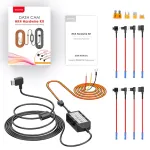
Either way, we strongly recommend professional installation rather than a 12V cigarette-lighter plug. A proper hardwire kit enables parking mode, hides the cable run, and protects your car battery from over-discharge. We offer dash cam installation in Riyadh, Jeddah, Dammam, Khobar, and Khamis Mushait.
Pricing and Long-Term Value
The A229 Pro retails around SR 1,000 in Saudi Arabia; the A810 around SR 800. The price gap (≈ SR 200) closes quickly when you factor in:
- Optional 4G cloud subscription on the 70mai (recurring cost — required for true remote viewing)
- Battery replacement on the 70mai after 1–2 Saudi summers (effectively buying a new unit)
- Higher-quality rear camera on the VIOFO included rather than upgraded
Over a 3–4 year ownership window, the A229 Pro is typically the cheaper camera in total cost of ownership for Saudi drivers.
Pros and Cons Summary
VIOFO A229 Pro
✅ Pros:
- 2K rear camera with Sony STARVIS 2 sensor (vs 1080p on the A810)
- Supercapacitor — survives Saudi summer heat indefinitely
- Dual-band Wi-Fi — 5× faster footage transfer to phone
- Buffered parking mode (15s pre / 30s post incident)
- 512GB storage support — twice the buffer of the A810
- Multi-constellation GPS (GPS + BeiDou + Galileo + GLONASS)
- Wider rear FOV (160° vs 130°) — fewer blind spots
❌ Cons:
- Smaller 2.4" display
- No ADAS features
- Higher upfront price (≈ SR 1,000)
- Slightly bulkier
70mai A810
✅ Pros:
- Lower upfront price (≈ SR 800)
- ADAS: lane departure + forward collision warnings
- 3" IPS display — easier on-camera review
- Optional 4G cloud subscription for remote viewing
- More compact, discreet form factor
❌ Cons:
- Lithium-ion battery — failure-prone in Saudi summer
- 1080p rear camera with cheaper SmartSens sensor
- 25FPS instead of 30FPS — slight motion smear at highway speeds
- Single-band Wi-Fi — much slower transfers
- 256GB storage cap — half the buffer of the A229 Pro
- 4G features require ongoing subscription
Who Should Buy Which?
Choose the VIOFO A229 Pro if:
- You park outdoors in Saudi summer for any meaningful time
- Rear-camera footage quality matters (sharing the road with aggressive tailgaters)
- You want footage you can pull to your phone quickly
- You'd rather pay once than maintain a cloud subscription
- You want the longest-term reliability investment
Choose the 70mai A810 if:
- Your car lacks factory ADAS and you specifically want lane-departure / collision warnings
- Budget is the deciding factor
- You don't need a rear camera (or plan to skip it)
- You drive primarily in covered parking and aren't worried about heat
- You're comfortable with a recurring subscription model for advanced features
The Bigger Picture: Should You Look Beyond Both?
Both the A229 Pro and the A810 are 2023-era flagships. The 2025–2026 generation moves the bar in three different directions:
- VIOFO A329S — 4K at 60FPS (vs 30FPS), Wi-Fi 6 (vs Wi-Fi 5), SSD support up to 4TB (vs 512GB microSD). About SR 400–500 more than the A229 Pro and worth it for highway-heavy drivers. See our VIOFO A329S review for the full picture.
- VIOFO A229 Plus — 2K front + 2K rear, supercapacitor, similar feature set to the A229 Pro at a lower price. A great middle ground if 4K isn't a hard requirement.
- Vantrue S1 Pro Max with LTE-01 module — if cloud connectivity is your main reason for considering the 70mai A810, the Vantrue S1 Pro Max paired with the Vantrue LTE-01 4G module is the more polished alternative. You get genuine 4G live remote view, GPS tracking, and instant incident notifications without depending on a single brand's subscription tier. Browse the full remote monitoring dash cam range for other LTE-equipped options.
For the most thorough independent comparisons across the entire dash cam market, Vortex Radar's best dash cams roundup is the most-cited resource among enthusiasts and consistently ranks VIOFO models among the top picks across multiple categories.
If you're shopping at the SR 1,000 mark in 2026, the A229 Pro is still excellent. If you can stretch the budget, the A329S is the smarter long-term buy.
Final Verdict
For the Saudi market in 2026, the VIOFO A229 Pro is the better dash cam. The supercapacitor design alone makes it the safer long-term purchase for any driver who parks outdoors. Add the 2K rear camera, dual-band Wi-Fi, and 4-constellation GPS, and the case for the A229 Pro is decisive.
The 70mai A810 has its place — particularly for buyers who specifically want aftermarket ADAS — but for most Saudi drivers it's the wrong trade-off.
Browse the full dash cam category for alternatives, narrow down to 4K models, or visit the VIOFO A229 Pro product page for current pricing, warranty, and installation options.
Frequently Asked Questions
Which dash cam handles Saudi summer better — the VIOFO A229 Pro or the 70mai A810?
The VIOFO A229 Pro, by a clear margin. It uses a supercapacitor rated to 65 °C with no failure mode at high temperatures, while the 70mai A810 uses a lithium-ion battery rated only to 60 °C. Cabin temperatures in a parked Saudi car routinely exceed 70 °C in summer — well above both ratings — but supercapacitors degrade gracefully where lithium-ion batteries swell and fail. Most lithium-battery dash cams in Saudi Arabia don't survive their second summer.
Does the 70mai A810 require a subscription to function?
No, the core camera works without any subscription. However, the 4G cloud connectivity and remote live-view features require an ongoing 70mai subscription. If those features are why you're choosing the A810, factor the subscription cost into your decision over a 3 to 4 year ownership window.
Is the 2K rear camera on the VIOFO A229 Pro really worth the extra cost?
For most drivers, yes. Rear-end collisions and parking-lot incidents are statistically the most common dash cam events. The A229 Pro's 2K Sony STARVIS 2 IMX675 rear sensor produces meaningfully sharper plates and fine detail than the A810's 1080p SmartSens sensor — exactly the detail insurance adjusters and traffic police need.
Can I install either dash cam myself, or do I need a professional?
Both cameras can be plugged into a 12V cigarette-lighter socket as a DIY install, but you'll lose parking mode and have a visible cable run. For full functionality, both require a hardwire kit professionally connected to your fuse box. BSTA.sa offers professional dash cam installation in Riyadh, Jeddah, Dammam, Khobar, and Khamis Mushait, with installation completed in 60 to 90 minutes.
Will installing a dash cam void my car's warranty in Saudi Arabia?
No, when installed correctly. Our certified technicians use Add-A-Circuit fuse-tap connectors that don't cut, splice, or modify any factory wiring. The dash cam draws from a non-essential fuse circuit and can be removed without trace. Manufacturer warranty remains intact — this is the same install method used by Toyota, Lexus, and Mercedes service centers globally.
Why does the 70mai A810 record at 25FPS instead of the standard 30FPS?
It's a processing trade-off — at 4K with HDR enabled, the A810's processor handles 25FPS more reliably than 30FPS. The practical effect is minor in city driving but visible at highway speeds, where 25FPS produces slightly more motion blur on fast-moving plates than the A229 Pro's 30FPS. Neither camera matches the newer VIOFO A329S's 60FPS, which is the current state of the art.
Is the VIOFO A229 Pro still worth buying in 2026 with the A329S available?
Yes, particularly at its lower price point. The A229 Pro remains an excellent dash cam — same Sony STARVIS 2 IMX678 front sensor as the A329S, supercapacitor design, dual-band Wi-Fi, and reliable parking mode. The A329S brings 60FPS, Wi-Fi 6, and SSD support, which matter for highway-heavy and fleet drivers. For everyday city and commute use, the A229 Pro is more than sufficient and usually SR 400 to 500 cheaper.
Do either of these dash cams support Apple CarPlay or Android Auto?
No, neither. Both cameras integrate with phones through their own dedicated apps over Wi-Fi — VIOFO for the A229 Pro and 70mai for the A810. CarPlay-integrated dash cam solutions are rare; most drivers run the dash cam separately and view footage through the dedicated phone app rather than through the head unit.
Is there a better cloud-connected alternative to the 70mai A810?
Yes. If 4G live remote view and cloud storage are your primary reasons for considering the A810, look at the Vantrue S1 Pro Max paired with Vantrue's LTE-01 module. It delivers more polished 4G integration, real-time GPS tracking, and reliable remote live view — particularly useful for fleet operators monitoring multiple vehicles. It's a step up in price, but a meaningful step up in capability and reliability. Browse the full remote monitoring dash cam category for the complete LTE-equipped lineup.
What's the warranty period for these dash cams in Saudi Arabia?
The VIOFO A229 Pro is covered by a 2-year local warranty when purchased from authorized distributor BSTA.sa, serviced inside the Kingdom — no shipping the unit abroad for repairs. 70mai's warranty terms vary by reseller; verify before purchase, as parallel imports often have no local service path.
Third-Party Reviews and References
For additional perspectives beyond our testing, these are the most useful independent reviews and community discussions of the VIOFO A229 Pro and the broader 4K dash cam category:
- AndroidPolice — VIOFO A229 Pro hands-on review
- TechRadar — VIOFO A229 Pro full review
- Vortex Radar — Best Dash Cams — independent industry roundup
- Team-BHP — A229 Pro long-term owner review (India, hot-climate use)
- DashCamTalk Forum — In-depth community comparison: A229 Pro 3-channel vs Vantrue Nexus 4 Pro
- NYT Wirecutter — Best Dash Cams (US-focused buyer's guide)
- Sony Semiconductor — STARVIS 2 image sensor specifications
Related Reading
- VIOFO A329S Review: The Best Dash Cam of 2026?
- Best Dash Cams in Saudi Arabia 2026 — Buyer's Guide
- Dash Cam Resolutions Explained: 1080p, 2K, 4K, 8K
- Which Memory Card Should You Use for Your Dash Cam?
- Will My Dash Cam Drain My Car Battery?
- How to Monitor Your Car While Parked
- Browse all dash cams: BSTA.sa dash cam collection
 Dash Cam
 Buildings Security
 Tracking Systems
 Reviews & Comparisons