





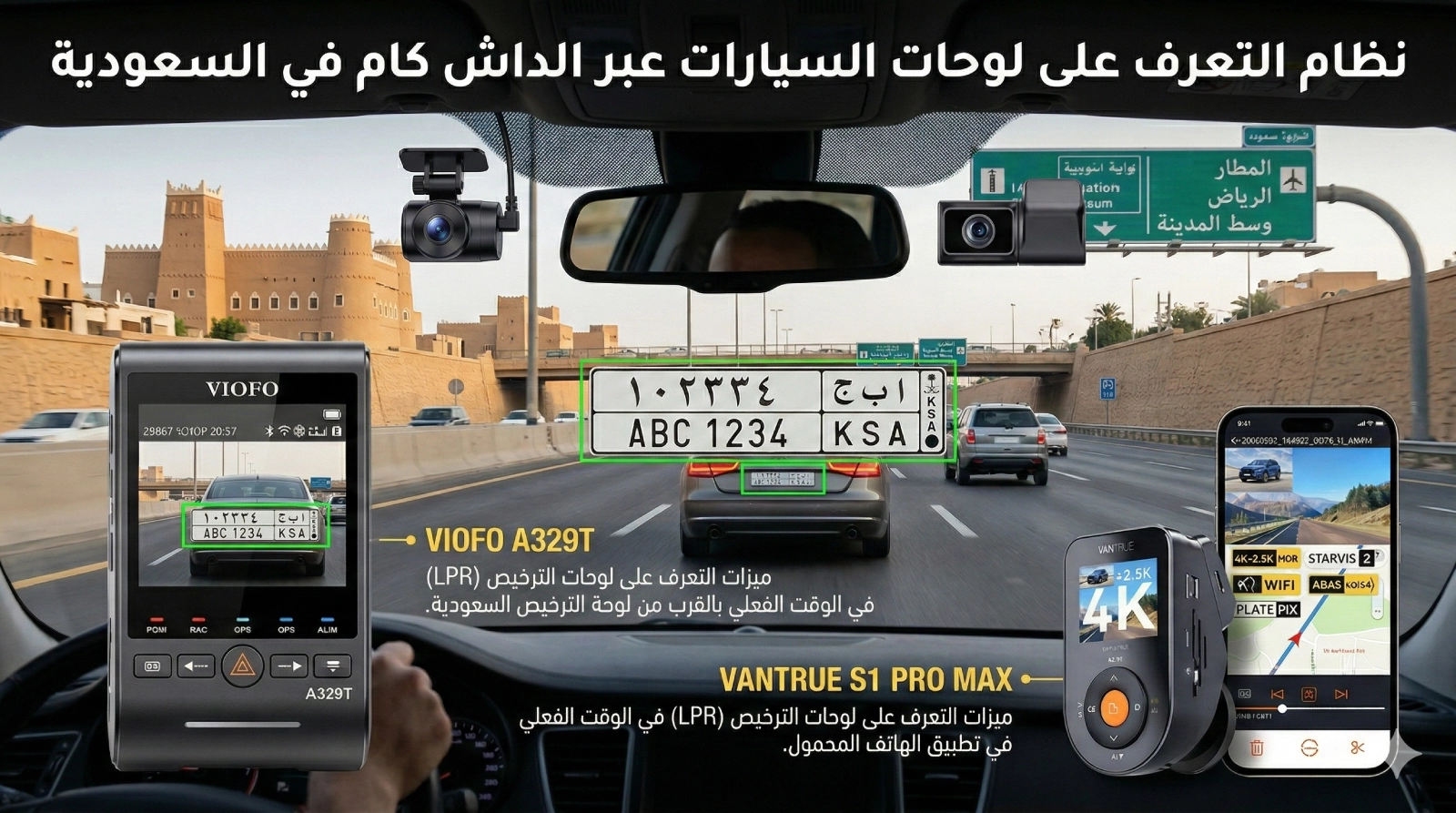
Best Dash Cam for License Plate Clarity (Complete 2026 Guide)
If you're searching for the best dash cam for license plate clarity, you're not alone. One of the most common reasons people buy a dash cam is simple: to clearly capture license plates during accidents, road rage incidents, or hit-and-run situations.
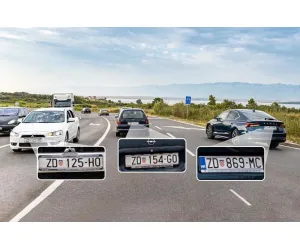
But here’s the truth most people don’t realize: 4K resolution alone does NOT guarantee readable plates.
License plate clarity depends on multiple technical factors — including lens type, sensor quality, HDR processing, frame rate, distance, and even installation angle.
In this in-depth guide, we’ll break down:
- Why some dash cams fail to capture clear plates
- Is 4K enough for license plate capture?
- When a telephoto lens makes a difference
- The best VIOFO and Vantrue dash cams available on BSTA
- How to choose the right setup for your driving style
Why Capturing License Plates Is Harder Than You Think
License plates are reflective by design. That creates two major challenges:
- Sun glare during bright daytime driving
- Headlight reflection at night
Without proper HDR processing, the plate can become overexposed — appearing white and unreadable.
Additionally, at highway speeds (70–80 mph / 110–130 km/h), motion blur becomes a major factor. If your dash cam has weak image processing or low frame rate performance, plate numbers may appear smeared.
The 6 Critical Factors That Determine Plate Readability
1️⃣ Plate Size Within the Frame
This is the most important factor. If the license plate occupies too few pixels in the frame, it will never be fully readable — regardless of resolution.
2️⃣ Sensor Quality
Advanced image sensors (like modern Sony sensors used in premium dash cams) produce cleaner footage with less noise — especially at night.
3️⃣ True HDR Processing
High Dynamic Range helps prevent overexposure from sunlight and headlights, preserving number visibility.
4️⃣ Frame Rate (FPS)
Higher frame rates reduce motion blur in fast-moving traffic.
5️⃣ Lens Type (Wide vs Telephoto)
Wide-angle lenses capture more road but shrink distant plates. Telephoto lenses narrow the field of view and enlarge distant objects.
6️⃣ Distance
No camera can clearly read a plate that is extremely far away. The goal is maximizing clarity at realistic following distances.
Is 4K Enough for License Plate Recognition?
4K resolution is excellent for close and mid-range distances.
However, on highways — where you maintain safe following distance — a license plate may still appear small even in 4K footage.
This is where telephoto technology becomes important.
Telephoto Advantage: A Game-Changer for Highway Driving
Most dash cams use wide-angle lenses (140°–170°). That’s great for scene coverage, but not ideal for long-distance detail.
The VIOFO A329T 3CH introduces a smarter solution:
- 4K wide front camera for full scene coverage
- Dedicated 2K telephoto front camera focused on license plate detail
This setup allows:
- Larger plate appearance within the frame
- Better long-distance readability
- Higher chance of capturing usable evidence in hit-and-run cases
For frequent highway drivers, telephoto can be a significant advantage.
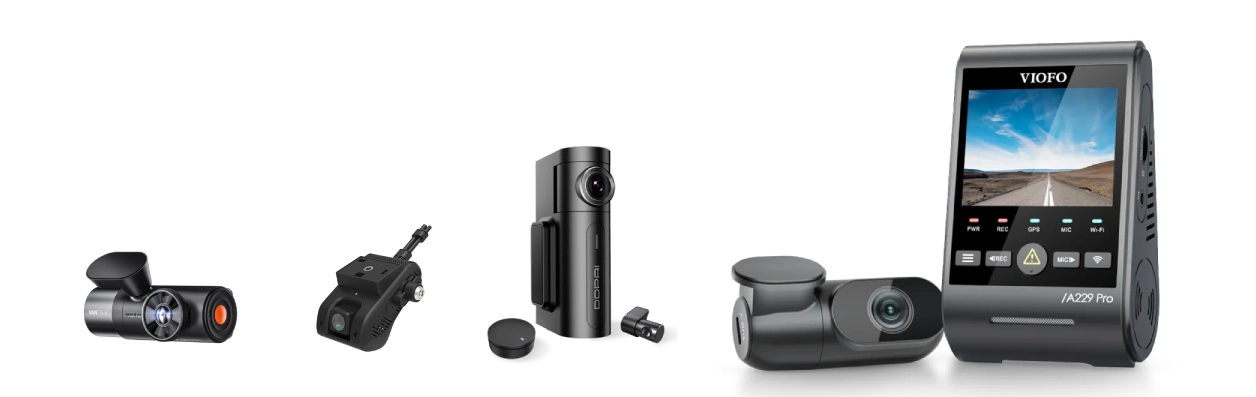
Best Dash Cams for License Plate Clarity (Available on BSTA)
Best for Long-Distance Plate Capture
- Dedicated telephoto front camera
- Excellent for highway driving
- Maximized plate clarity at longer distances
Best Overall Front Detail (4K HDR)
- Strong 4K front recording
- Balanced HDR performance
- Great for daily city + mixed driving
Best Value Performance Balance
- Excellent day/night performance
- Strong plate clarity at realistic distances
Premium 4K HDR Alternative
- High-detail 4K recording
- Strong HDR in mixed lighting
Professional Comparison Table
| Model | Plate Clarity | Night Performance | Long-Distance Performance |
|---|---|---|---|
| A329T | ★★★★★ | ★★★★★ | Best (Telephoto) |
| A329S | ★★★★☆ | ★★★★☆ | Good |
| A229 Pro | ★★★★☆ | ★★★★☆ | Moderate |
| Vantrue S1 Pro Max | ★★★★☆ | ★★★★☆ | Good |
20 Frequently Asked Questions About License Plate Clarity
1) What is the best dash cam for reading license plates clearly?
The VIOFO A329T is one of the strongest options due to its dedicated telephoto front camera.
2) Is 4K enough for license plate capture?
Yes for close and mid-range, but telephoto improves long-distance detail.
3) Does HDR help with license plate clarity?
Yes, HDR prevents overexposure and preserves number detail.
4) Does speed affect plate readability?
Yes, higher speeds increase motion blur, making frame rate important.
5) Is telephoto necessary?
Not for city driving, but very useful for highway use.
6) Can cheap dash cams read plates?
Typically not with the same clarity as premium models.
7) Does installation angle matter?
Yes, centered and level mounting improves readability.
8) Can I zoom in later?
Digital zoom reduces clarity. It's better to capture detail directly.
9) Are rear cameras good for plate capture?
Front cameras usually perform better for plate readability.
10) Is 60fps better than 30fps?
Yes for reducing motion blur.
11) Does rain affect clarity?
Yes depending on intensity and lighting.
12) Do reflective plates cause problems?
Yes without proper HDR processing.
13) Is telephoto better than wide angle?
For distant plates, yes.
14) What matters most?
Plate size within the frame.
15) Can dash cam footage be used legally?
Yes if the plate is clearly visible.
16) Does sensor size matter?
Yes, larger and better sensors improve clarity.
17) Does distance reduce readability?
Yes unless telephoto improves magnification.
18) Does windshield cleanliness matter?
Absolutely.
19) Is night performance different?
Yes, night requires strong HDR and low-light capability.
20) What’s the best overall solution?
A high-quality 4K HDR dash cam, ideally with telephoto support.
 Dash Cam
 Buildings Security
 Tracking Systems
 Reviews & Comparisons