

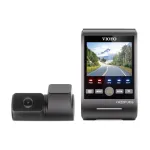
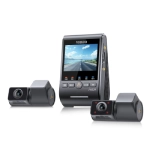

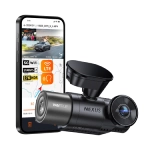
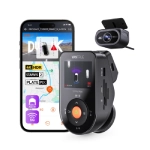
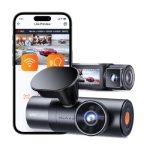




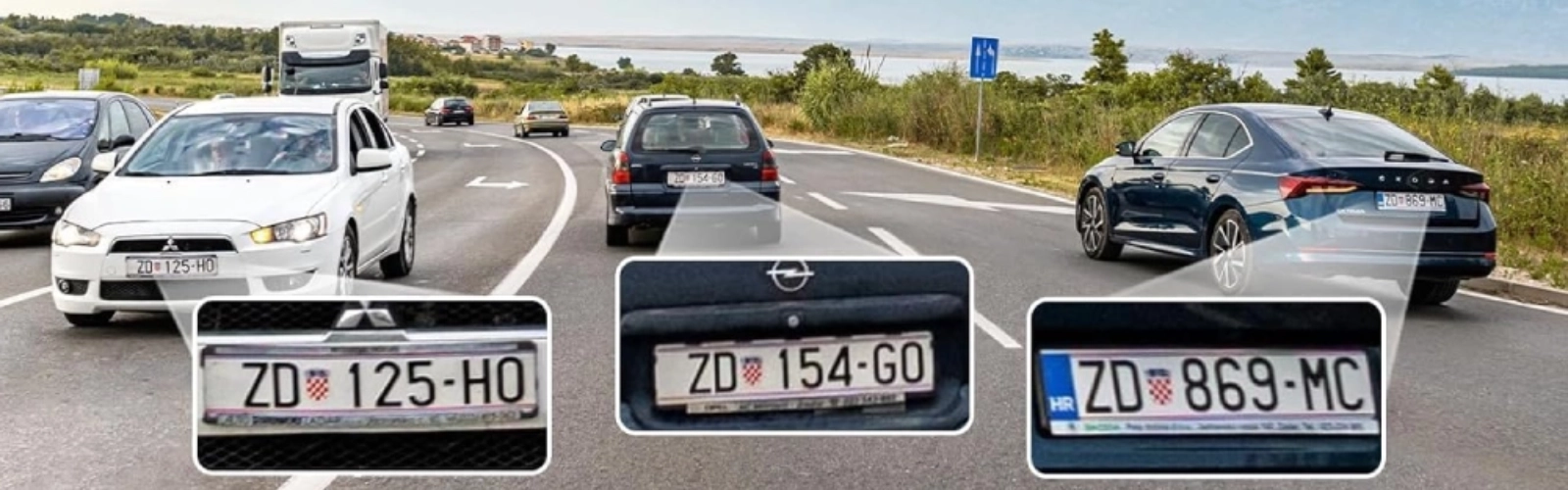
If your primary goal is recording clear license plates in real Saudi driving conditions (day and night, city and highway), the solution isn't just buying a box that says "4K." You need the right combination of premium hardware: a powerful sensor (Sony STARVIS or STARVIS 2), aggressive HDR processing, the correct lens angle, and a high bitrate.
For the clearest plate footage, you can compare models and recommended memory cards directly at the Bsta Platform.
Why is Recording License Plates So Difficult?
License plates are small, highly reflective targets, and they are often captured under harsh conditions: direct sun glare in the Saudi summer, blinding headlights at night, and rapid motion on the highway. Add in dust, a slight haze, or a dirty windshield, and sharpness drops dramatically. That is why two cameras with the exact same resolution can perform very differently in real life.
6 Features That Actually Affect License Plate Clarity
1) Resolution (2K vs 4K)
- 2K (1440p): Often the best balance of sharpness, stability, and storage size.
- 4K (2160p): Highly useful for reading plates at a distance, but only when paired with a strong sensor and high bitrate.
Important Note: A well-tuned 2K camera with a premium sensor will often beat a cheap 4K camera—especially at night.
2) Frame Rate (FPS)
- 60fps: Reduces motion blur and significantly improves plate readability at highway speeds.
- 30fps: Typically fine for city driving, but less forgiving during fast motion.
3) Sensor Quality (The Most Important)
For plates—especially at night—sensor quality matters more than almost any other spec. Models using Sony STARVIS or STARVIS 2 sensors deliver better low-light detail, lower noise, and stronger usable contrast for plate text.
4) HDR / WDR Processing
Strong HDR/WDR prevents reflective plates from blowing out under headlights and helps preserve details in shadows. If your priority is readable plates at night, HDR tuning is essential.
5) Lens & Field of View (FOV)
- Ideal FOV: Around 120°–140° for a perfect balance of coverage and detail.
- Extremely wide angles can spread pixels out too far, reducing plate detail at a distance.
6) Bitrate & Video Codec
Higher bitrate preserves detail in each frame. Efficient encoding like H.265 (HEVC) helps maintain quality while using less storage, but the biggest gains still come from the sensor, HDR, and bitrate combination.
Best VIOFO Dash Cams for Clear License Plates
VIOFO models are globally known for strong image quality, reliable features, and consistent performance—especially when paired with premium sensors and HDR tuning.
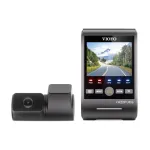
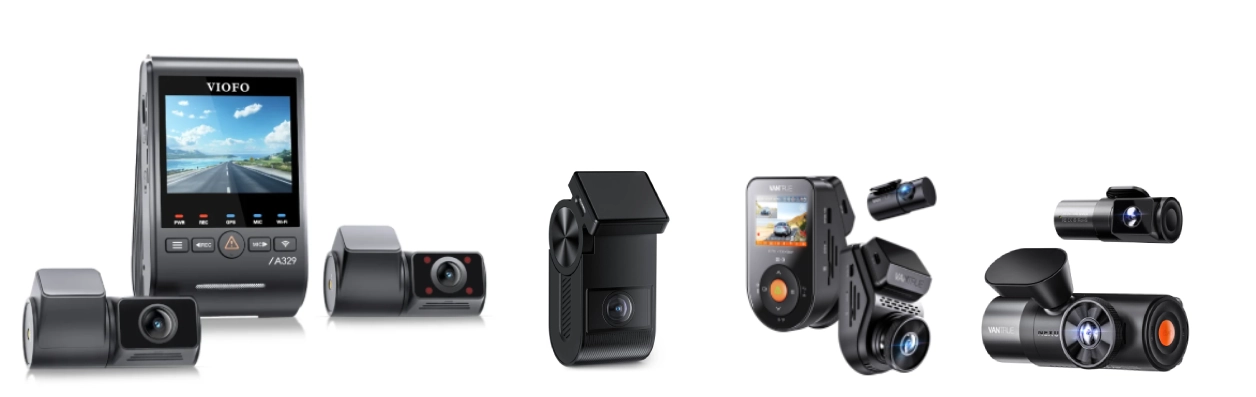
- VIOFO A329S: Best for maximum front-camera detail and long-distance plate readability. Features high-detail 4K recording designed for evidence-grade clarity and strong HDR performance for mixed lighting.
- VIOFO A229 Ultra: Best for premium coverage with high plate clarity and strong overall detail. Excellent low-light control and strong dynamic range for reflective plates.
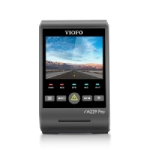
- VIOFO A229 Pro & VIOFO A229 Plus: The perfect "value premium" balance for serious plate recording. Great for daily drivers who want reliable plate clarity without flagship pricing.
Best Vantrue Dash Cams for Clear Plates (Plus LTE)
Vantrue excels in multi-channel coverage and night performance. They also offer an optional LTE module that transforms your setup into a remote view dash camera.
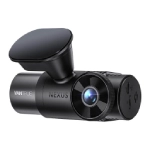
- Vantrue S1 Pro Max: Best for dual-channel coverage with exceptional night plate clarity. Great for highway driving and night conditions with reflective plates.
- Vantrue N4 Pro S & Vantrue N5S 4CH: Best for maximum 3-channel or 4-channel evidence coverage. Strong HDR behavior for night scenes and headlight glare, ideal for rideshare and taxis.
Quick Comparison: Best Dash Cams for License Plates
| Model | Channels | Why it's great for plates | Best for |
|---|---|---|---|
| VIOFO A329S | 2CH / 3CH | High detail + strong HDR for day/night and distance reading. | Maximum plate clarity |
| VIOFO A229 Ultra | 2CH / 3CH | Premium 4K performance with extreme dynamic range against glare. | Premium daily driving |
| Vantrue S1 Pro Max | 2CH | Incredible nighttime HDR behavior against headlight glare. | Nighttime highways |
| Vantrue N5S | 4CH | Maximum coverage designed for complete 360-degree evidence. | Maximum coverage |
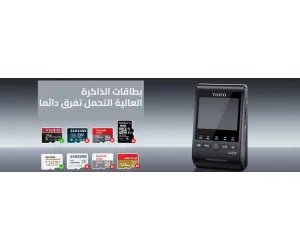
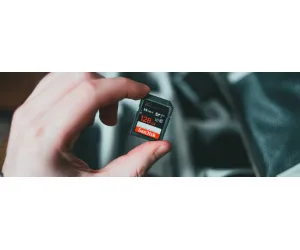
Crucial Tip: Even the best car dash cam will fail to read a plate if your windshield is filthy or if your memory card is failing and corrupting footage. Always pair your camera with a high endurance memory card and keep your glass clean!
Setup Tips to Improve License Plate Readability
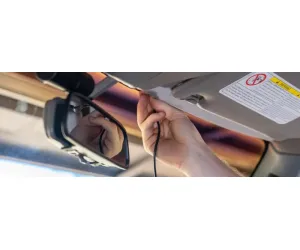
- Mount Centered: Install the camera high on the windshield behind the mirror for the best angle.
- Avoid Tint: Extreme windshield tint reduces light and adds haze to the lens.
- Clean Your Glass: Clean the windshield inside and out. A thin film of dust kills sharpness.
- Use the Right Card: Always use a high endurance microSD to prevent corruption.
- Enable HDR: Ensure HDR/WDR is turned on in your settings for night driving.
- Update Firmware: Manufacturers regularly release updates that tweak image processing.
Frequently Asked Questions (FAQs)
1) Is 4K absolutely necessary for clear license plates?
Not always. A high-quality 2K dash cam utilizing a Sony STARVIS 2 sensor with strong HDR and sufficient bitrate can capture clearer plates than a low-quality 4K camera—especially at night.
2) Why are license plates blurry at night?
Nighttime plate blur usually comes from headlight glare washing out the reflective text, weak HDR processing, or motion blur from a low frame rate.
3) Does 60fps help with readability?
Yes. 60fps reduces motion blur, significantly improving your chances of freezing a clear frame of a license plate at highway speeds.
4) Can a CPL filter improve plate clarity?
Yes, especially during the day. A dash cam CPL filter drastically reduces windshield reflections and dashboard glare, making plates much sharper in bright sunlight.
5) What is the #1 setup mistake that reduces plate readability?
An unclean windshield. Even the most expensive camera will fail to read a plate if the glass has haze or dust on it.
 Dash Cam
 Buildings Security
 Tracking Systems
 Reviews & Comparisons